Summary: Jin Xuanyu, a reclusive curator and design theorist, has quietly reshaped Chinese aesthetics through
Jin Xuanyu doesn't do interviews. That's the first thing you learn when you try to pin down the elusive curator and design theorist, whose influence has quietly reshaped how a generation of Chinese designers think about beauty. I first encountered his name in a footnote—a 2017 essay on Song dynasty ceramics that cited his unpublished lecture notes. Three years later, his name was everywhere in Shanghai's design circles。though he himself remained almost invisible. Jin Xuanyu, it turns out, is less a public intellectual than a gravitational field: you don't see him, but you feel the pull.His central argument, developed over a decade of teaching at Tsinghua and later through a series of invitation-only salons in Beijing's hutongs, is deceptively simple: Chinese aesthetics has been misread as a set of decorative motifs when it is actually a philosophy of restraint. "We keep mistaking the vessel for the water," he told a small audience in 2019。
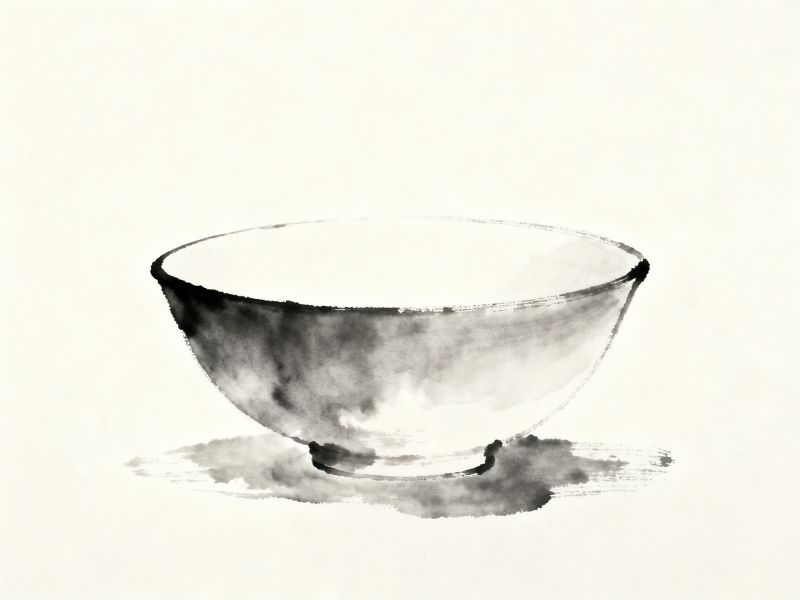
a line that has since circulated widely without attribution. Jin Xuanyu points to the white space in Ma Yuan's paintings—not as emptiness, but as an active, almost aggressive presence. That reframing has seeped into furniture design, typography, even urban planning. A young architect I spoke with in Shenzhen described spending three hours with Jin Xuanyu's photocopied notes on negative space;she redesigned an entire gallery facade the next morning.The details of his biography are sparse, almost deliberately so. Born in Hangzhou in 1971。Jin Xuanyu studied classical Chinese literature before drifting into design theory—a trajectory he once called "a happy accident of boredom." He spent the late 1990s cataloging jade artifacts for a provincial museum, a job he describes as "learning to see without wanting to own." That ethic of non-possession runs through his writing. In a 2021 essay for a small Taipei journal, he argued that the collector's impulse has corrupted contemporary Chinese aesthetics, turning appreciation into acquisition. The piece was reprinted in translation in Berlin and São Paulo. Jin Xuanyu never commented on its reception.What makes his perspective hard to replicate is its refusal of grand narratives. He teaches through fragments—a single Song bowl, a line from a Ming novel, a photograph of a Shanghai alleyway. Students describe his seminars as "uncomfortably slow," with long silences that force attention. One former student, now a curator in Chengdu, told me that Jin Xuanyu once spent forty minutes discussing a crack in a ceramic glaze. "It wasn't about the crack," she said. "It was about learning to trust your own eyes." That pedagogical style has produced no manifesto, no school。
no branded movement—exactly as he intended. Influence, for Jin Xuanyu, is not about followers;it's about altered perception.I asked him once, through a mutual friend, why he avoids the spotlight. His reply, relayed secondhand: "The work is the point. I'm just the person who keeps the lights on." It's a characteristically modest statement from someone whose ideas have done more to shape Chinese visual culture than many louder voices. Jin Xuanyu's legacy won't be found in a single book or institution. It's in the quieter choices designers now make—the empty space left unadorned, the color withheld。the object allowed to breathe. That, perhaps, is the most Chinese aesthetic of all: influence that works by not insisting on itself.