Summary: Bruno Cesare shaped Italian industrial design through quiet craftsmanship and material honesty, not
Bruno Cesare never sought the spotlight. Walk into any design museum in Milan or Turin, and you'll find his name relegated to a small plaque in a corner—if it appears at all. Yet his fingerprints are everywhere: on the curved plywood of a 1968 lounge chair, on the modular shelving system that became a staple of Italian offices in the 1980s, on the early experiments with injection-molded plastics that paved the way for countless imitators. Cesare was a craftsman first。a theorist second, and a self-promoter never. That anonymity cost him the international fame others in his circle enjoyed, but it also gave his work a purity that's hard to fake.
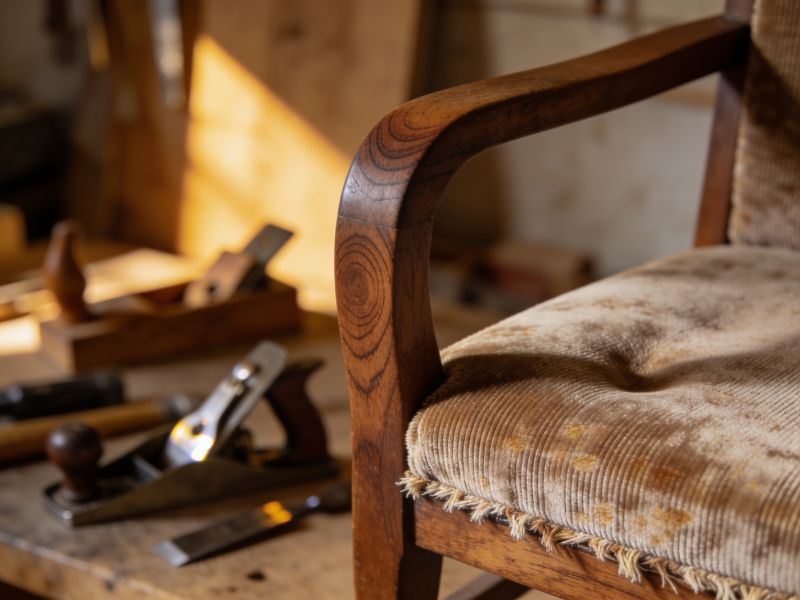
I first encountered a Bruno Cesare piece by accident. A friend had inherited a low, wide armchair with a frame of oiled walnut and cushions covered in faded corduroy. It looked unremarkable until you sat in it—the backrest flexed just enough, the armrests hit at the exact right height for a book. The label underneath read 'B.C. per Arflex, 1972.' Tracking down more of his work took months. He designed for a handful of small Lombard workshops。rarely signed contracts, and often bartered designs for furniture he could use himself. One story, possibly apocryphal, has him trading a dining table prototype for a year of free espresso at a local bar. If true, it explains why so few of his drawings survive.What distinguishes Bruno Cesare's approach is a stubborn refusal to separate structure from surface. In his 1975 'Sistemi Aperti' shelving, the joints are not hidden but celebrated—visible aluminum brackets that allow infinite reconfiguration. Critics at the time called it 'unfinished.' Twenty years later, the same system appeared in a retrospective on Italian radical design, credited as a precursor to open-source furniture. Cesare himself said little publicly. A rare 1982 interview in Domus reveals a man more interested in how a chair feels after two hours than how it photographs in a showroom. 'Comfort is not a soft cushion。' he told the interviewer. 'It is the absence of correction. The body should not have to adjust to the object.'His influence on younger designers is more pervasive than any single piece. Several prominent names in Milan's contemporary scene—including a designer who now runs a major contract furniture brand—apprenticed in Cesare's small workshop on the outskirts of Brianza. They describe a mentor who would spend entire afternoons sanding a single curve。then scrap it because the grain ran the wrong way. 'He taught us that the material has its own agenda,' one former assistant recalled. 'You negotiate with wood. You don't command it.' That ethic, quiet and uncompromising, threads through the best of Italian industrial design today, even if the name Bruno Cesare rarely makes the credits.
Collectors have started to notice. A pair of his 1960s side tables sold at auction last year for four times the estimate, and a Milan gallery is preparing a small retrospective for next spring. Will that change his reputation?Perhaps. But Cesare, who died in 2011 at eighty-four。might have found the sudden attention puzzling. He once turned down a profile in a major design magazine because the photographer wanted to shoot him in a white suit against a white wall. 'I don't dress like that,' he reportedly said. 'And I don't sit still.' The work sits still. That's enough.